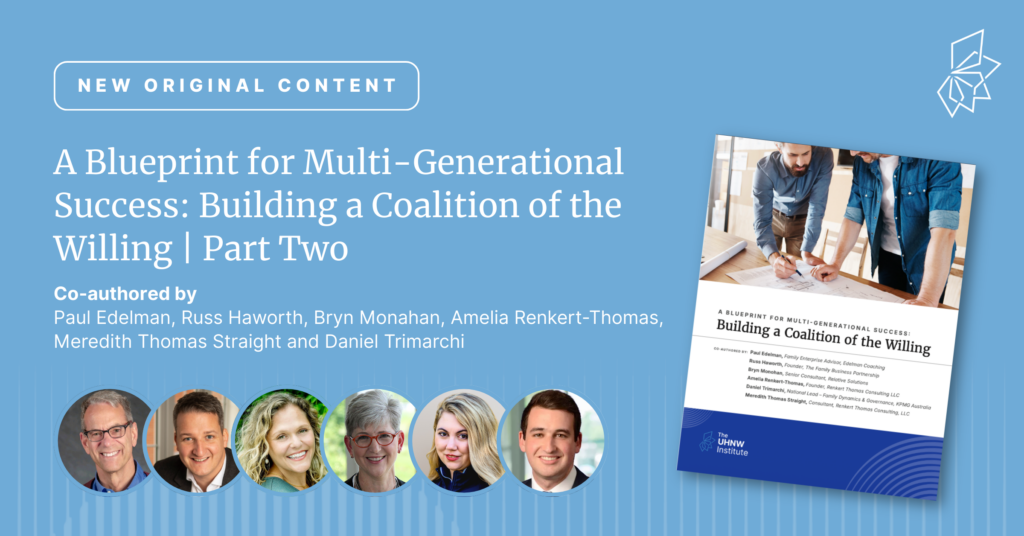
When a family enterprise grows to include 20 or 30 family members who all want a role in the business, the question is no longer just who leads. Instead, a deeper question emerges: How does leadership itself need to be redefined?
Written by a team of UHNW Institute faculty members, this whitepaper continues the work begun in Part One, moving from governance structure to the human dimensions of making a coalition work in practice.
In Part Two, Assuming ‘One’ to ‘Many’ Accountability: The Motivation and Willingness to Learn, Contribute and Accept Responsibility, the authors examine what it takes for families to shift from a single decision-maker model to a shared one, and why willingness, capability-building and clear accountability are at the heart of that shift.
The paper addresses how families can move past the reflex to measure rising generation family members primarily by entrepreneurial spark and instead recognize the full range of skills different family members bring. It also introduces the concept of optionality, creating a range of roles and pathways so that family members can find where they fit and contribute, whether in management, on a board, through a family council or in a philanthropic role.
Part Two also walks through a practical decision matrix exercise to help families clarify who decides what and closes with seven keys to leading a successful coalition, from understanding the family’s history of successes and failures to building the capacity to manage disagreements and embracing the coalition mindset as a form of legacy.
Read Part Two here.
In case you missed it, read Part One here.
Meet the Authors:

Paul Edelman, Family Enterprise Advisor, Edelman Coaching

Russ Haworth, Founder, The Family Business Partnership
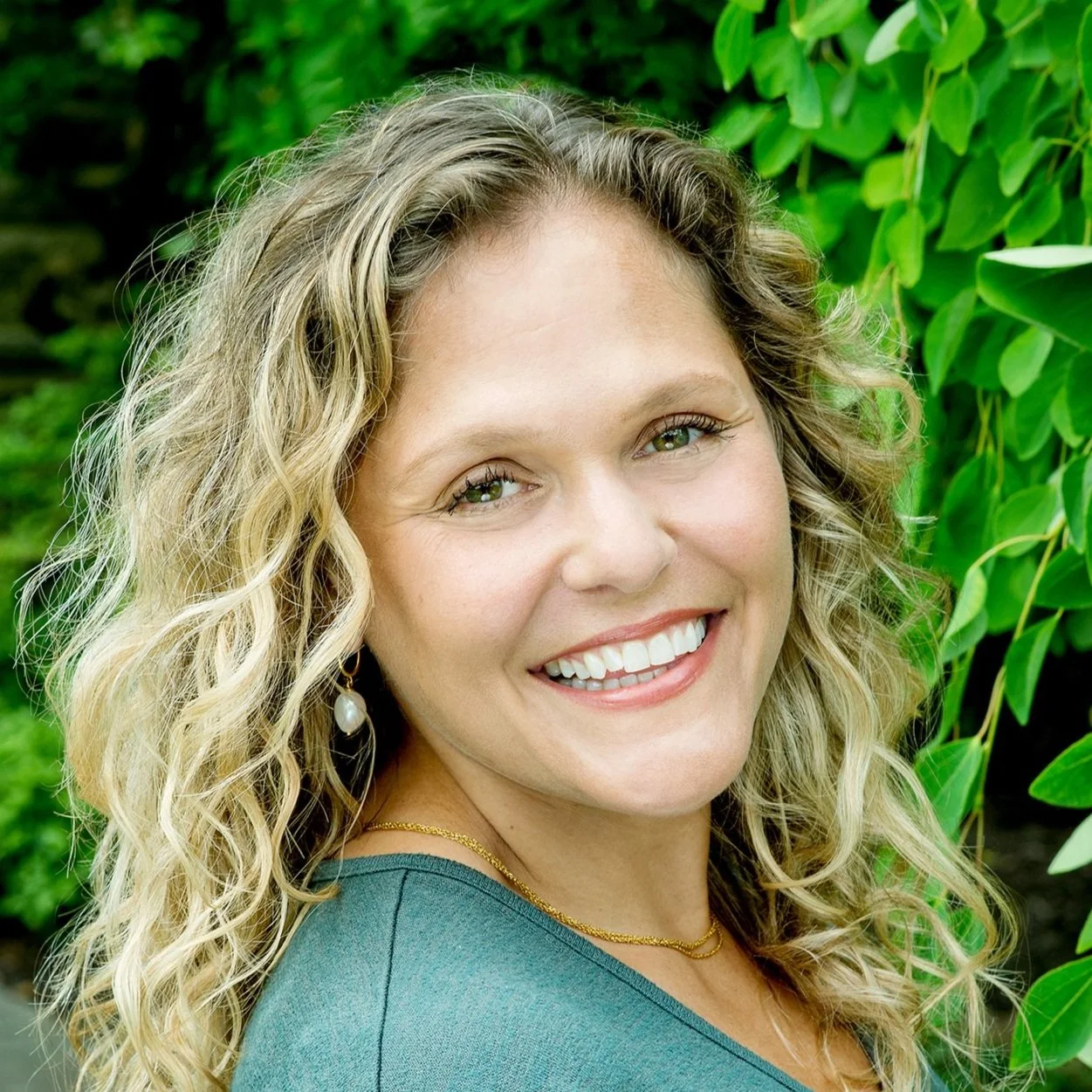
Bryn Monahan, Senior Consultant, Relative Solutions

Amelia Renkert-Thomas, Founder, Renkert Thomas Consulting LLC

Daniel Trimarchi, National Lead – Family Dynamics & Governance, KPMG Australia

Meredith Thomas Straight, Consultant, Renkert Thomas Consulting, LLC